A call tracking number is a separate phone number you put on one source – one ad, one listing, one truck – that forwards to your real line, so every call arrives labeled with where it came from. Most businesses need three to start: one website pool, one for your Google Business Profile, one for your biggest offline channel. The caller dials it, reaches you as normal, and your report shows the source, the time, the recording and whether you answered. Call tracking numbers are the front end of a larger call tracking and analytics system: the numbers collect where the call came from, and the reporting behind them turns that into call volume by source, missed calls, recordings and the metrics worth watching. This is the bill moment: you paid for an ad and you can’t tell what it bought. One number per source is the whole trick.
- One number per source: ad, listing, mailer, truck, sign.
- Each number forwards to your real line. Callers notice nothing.
- Website numbers can swap by visitor source, so online calls get labeled too.
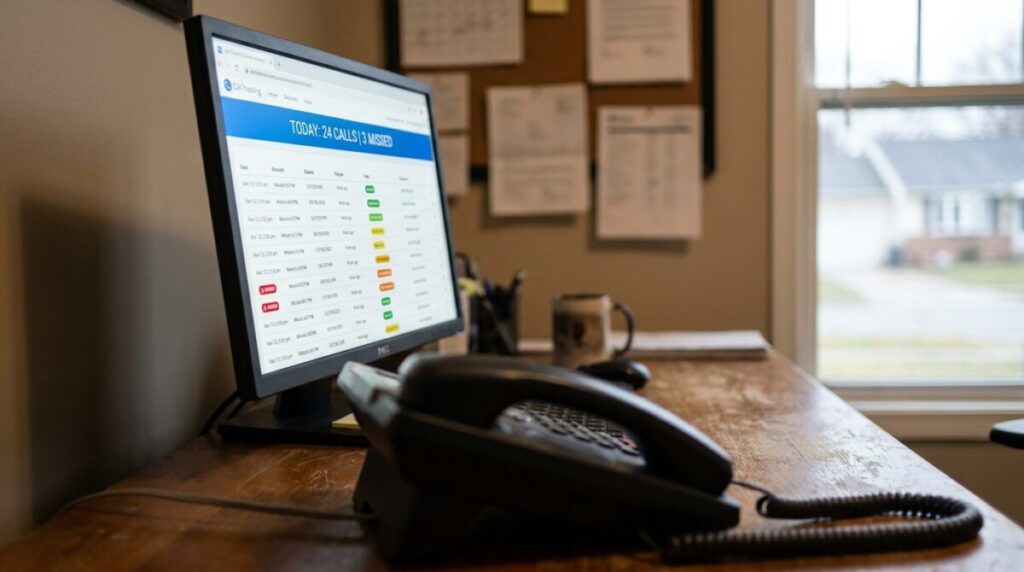
- Missed calls get flagged, and the 8am missed-call list says who to call back.
- Month-to-month, no setup fee, prepaid usage, cancel anytime.
What a call tracking number actually is
How a call tracking number works
It’s a real phone number, local or toll-free, and it rings your existing line. The difference is that only one source knows it. Put one number on your Google Business Profile and a different one on your postcard, and every call tells you which one worked before you say hello.
Our sample account shows 191 inbound calls in a month: 56 from Google Ads, 39 from Google Business, 25 from the website, 9 from the truck wrap. Sample data, but that’s the shape of the answer.
Next step: list your sources on paper before you buy a single number.
The belief to drop: one number is simpler
Most owners think more numbers means more confusion. It’s the opposite.
With one number, every call looks the same and you guess. With six, the phone still rings in one place and the report does the sorting. Callers only ever see the number on the thing they were looking at.
A tracking number does not change how you answer the phone. It changes what you know afterwards.
Next step: keep your main business number where it is and add tracking numbers around it.
Two kinds of numbers: printed and swapped

Printed numbers vs swapped website numbers
Printed numbers go on things you control: a truck wrap, a yard sign, a postcard, a radio spot, your Business Profile. One number each, logged with date, time, caller number, duration, and a recording if you turn it on. Cheap and flat.
Swapped numbers live on your website. A small script reads how the visitor arrived – the referring site, UTM parameters, the Google Ads click ID – and shows that visitor the number matching their source.
Source-level pools give a small set of numbers per source: simple and inexpensive. Session-level pools give each active visitor their own number for their session, which is what lets you see the keyword and landing page behind a call. Session-level holds more numbers, so it costs more. Our guide to how call tracking numbers work walks through both.
Call tracking numbers are one piece of the whole thing. Start with what call tracking is and how it works, see the reporting side on our call tracking metrics page, read the trade-by-trade setups on the industries page, and get the rate table and the Estimate my cost tool on the plans and pricing page. Month-to-month, no setup fee, cancel anytime.
Next step: start with printed numbers; they answer the bill moment faster.
How many numbers do you need?
Fewer than you think. You don’t need to track everything on day one.
A sensible first setup: one website pool, one number for your Google Business Profile, one for your biggest offline channel. Let it run a few weeks, see which sources produced booked jobs, and add from there.
A number earns its place only if you’d change a spending decision based on what it tells you. If you’ll never cancel the truck wrap, you may not need a number on the truck.
Next step: start with three numbers, not thirty.
What the numbers cost, and how we charge
Two parts, everywhere in this market: a plan fee, plus usage – the numbers you hold, the minutes you talk, the texts you send.
Our mechanic is a low plan fee plus exactly what you use, and usage is prepaid. You top up a Usage balance and draw it down, so there’s no surprise bill at month end. Month-to-month. No setup fee. Cancel anytime. The current rate table and the Estimate my cost tool are on the plans and pricing page.
One thing moves cost more than anything else: session-level website pools. More simultaneous visitors, more numbers held. Printed numbers are cheap by comparison.
Here’s what you get for it. Your ads dashboard counts clicks. Your analytics counts visits. The trail goes cold the second someone picks up the phone. A tracking number carries it across. In the sample account, 68 of 191 calls went unanswered, and the missed one at 7:42pm was a First-time caller from Google Ads. Calling back within a few minutes wins far more of these.
That’s the part an agency report can’t do. It comes from the people spending your money, it only sees the ads they run, and it doesn’t see the phone. A tracking number sees the free sources too: your Business Profile, organic, referrals, the truck.
Google’s own call reporting – forwarding numbers on ads and the Business Profile call button – is free and worth switching on. It covers Google only. It doesn’t record, doesn’t route, doesn’t tell you about a missed call, and the numbers reset or change on you. Most owners come to us after trying it and still not knowing where the other half of their calls came from.
Next step: run Estimate my cost with your real source list, then turn on the 8am missed-call list before anything else.
Key benefits of call tracking numbers for marketers and business owners
You already know how many clicks you bought. A tracking number tells you what happened after the click, once the phone rang.
- You see where the call came from. Not a guess, not a “how did you hear about us” at the end of a job: the source is on the call record before you say hello.
- You catch the calls you missed. Missed calls get flagged with the source and the caller’s number, and they land on the 8am missed-call list.
- You see the free sources too. Your Business Profile, organic, referrals, the truck. An ads dashboard only ever sees the ads.
- You can cut a source on evidence. That’s a spending decision, not an opinion.
- Agencies can show the phone. The call record is the part a clicks report can’t produce, which is why it matters for proving ROI to clients.
Popular use cases for call tracking numbers across channels
Same mechanic every time: one number, one source, one labeled call record. What changes is the question each number answers.
Google Ads
A swapped website number reads the Google Ads click ID, so a call ties back to the click. Session-level pools go further and show the keyword and landing page behind it.
Google Business Profile
Its own number, separate from your website.
Organic search and referrals
Part of your website pool.
Direct mail, radio and print
One printed number per postcard drop or spot.
Trucks, yard signs and vehicle wraps
Worth a number only if you’d actually cancel it.
Multi-location practices
A separate number per location, so one office’s miss rate doesn’t hide in the average.
Pick the ones you’d change spending on. Skip the rest.
If you’re a dental or medical practice, count differently
For a plumber, the call is the win. For a practice, the call is halfway. The win is a new patient on the schedule.
So a number on an ad should answer two things: how many new-patient calls it produced, and how many booked. New-patient calls from Google Ads: 22, booked: 9. A 41% booking rate. One booked implant case pays for years of tracking, so a 10-point move there is the biggest number in your marketing.
The owner never hears the phone; the front desk does. The recordings that matter are the ones that didn’t book. Insurance questions signal a pricing problem. “Next opening is in three weeks” signals capacity. “Let me check and call you back” signals training. About ten recordings a month is enough.
Practices miss calls at lunch, at 8am before the desk is staffed, and at 4:45. So you want missed calls by hour. More by trade on our industries page.
Next step: ask for new-patient calls by source with booked counts, not call totals.
A worked example: a plumbing company's source list
Here’s a real one, lightly anonymized. A plumbing company we set up this year listed every place their phone number appeared, then we took numbers for the six that mattered. Their sources, in the order they ranked them:
- Website (one pool, swapped by visitor source)
- Google Business Profile
- Organic search listing
- Google Ads
- Yelp
- Truck wrap
Six numbers, one line ringing. Over 30 days those six carried 200 inbound calls, and the surprise wasn’t where the calls came from: 71 of the 200 were missed, about one in three. The main line, their Business Profile and website, took 119 calls and missed 30. The organic search number took 45 calls, 34 of them first-time callers, and missed 24 of those, more than half. Yelp, the source they’d been watching, produced 3 calls all month.
The fix wasn’t more marketing. It was a second ring-to phone and missed-call alerts, so the new-customer calls they were already getting got answered. Copy the pattern: website pool, Business Profile, organic, your paid channel, and one or two offline sources you’d actually cancel.
Next step: write your six on paper, then cut it to the three you’d change spending on.
What the reports tell you: source, campaign, keyword, outcome
The numbers collect where the call came from. The reporting behind them turns that into something you can spend against. Here is what sits on a call record once the numbers are in place:
- Source. Google Ads, Bing, organic, direct, referral, social, directories, offline. The plain-speech version: where the call came from. I don’t use the word attribution with owners.
- Campaign, ad group and keyword. For paid search, pulled from UTM tags or the ad platform click ID. This needs session-level website pools, the kind that hold one number per visitor.
- Landing page and path. Which page the visitor was on when they picked up the phone, and the path they took to get there.
- First-touch or last-touch. Depending on how your tracking is configured. Ask which one your report is showing before you read it.
- Outcome. Time, duration, recording if enabled, answered or missed, first-time caller or repeat. For a practice, the outcome that counts is booked.
That is the full customer journey from ad to phone call, in one row.
How this changes what you spend
A keyword can look weak in your ads dashboard because it produces few form fills, and you pause it. With call tracking you can see it was producing a steady stream of phone calls the whole time. Same for landing pages: the page that drives the most calls is not always the page that drives the most clicks.
For agencies and anyone running paid search, the biggest lever is sending qualified calls back into the ad platforms as conversions. You capture the click ID with website dynamic number insertion, then import the calls that meet your qualification rules as offline conversions. Google’s Smart Bidding then optimizes toward calls that look like real leads instead of toward clicks or toward every call. Where most leads arrive by phone, that changes what the bidding algorithm is aiming at entirely.
The return-on-ad-spend math is the same math you already do. The only change is that booked phone calls are now on the revenue side of it, by source and by keyword, instead of missing from it. More on which numbers to read in our guide to the call tracking metrics worth watching.
Next step: before you pause a keyword, check what it did on the phone.
Setting the numbers up
We set them up for you. That’s Concierge setup: a person assigns the numbers, points them at your line, and reads the first report with you, so you can see what service call tracking software does for a business that answers its own phone. The person who sets up your account is the person who answers when you write.
- Write down every place your phone number appears today.
- Rank them by what you spend on each.
- Take a number for the top three.
- Leave your main line on invoices, trucks you won’t rewrap, and anywhere repeat customers look.
- Decide What callers hear, and whether calls are recorded.
- Wait three to four weeks before judging any source.
We don’t sell leads and we don’t run your ads. We tell you which ones made the phone ring, and you decide what to cut. If you want a hand with the list, write to us and a person answers.
Next step: send us your source list and we’ll do the rest.
FAQ
Will customers know they’re calling a tracking number?
No. It forwards to your real line and sounds the same to them and to you. The only thing they may hear is your greeting, including a recording notice if you use one.
Do I have to give up my existing business number?
No. Keep it. Tracking numbers go around it, on the ads and listings you want to measure. Your main number stays on invoices and repeat-customer contacts.
How many call tracking numbers do I need?
Three to start: one website pool, one for your Google Business Profile, one for your biggest offline channel. Let it run three or four weeks, see which sources produced booked jobs, then add from there. A number earns its place only if you’d change a spending decision based on what it tells you.
Does changing the number on my Google Business Profile hurt my ranking?
We don’t have a measured answer for your listing, and anyone who gives you a flat yes or no is guessing. The standard practice is to keep your main number as the primary and put the tracking number in the right field so your listed number stays consistent. Ask us and we’ll set it that way.
What happens to a call I miss on a tracking number?
It’s flagged as missed with the source and the caller’s number, and it lands on the next morning’s 8am missed-call list. First-time callers are marked. Call those back first.
Can I use call tracking numbers with my existing phone system, like RingCentral?
Yes. Phone systems do routing and voicemail well. They tell you a call happened, not which ad caused it, and they don’t tie the call to the website visit. Tracking numbers forward to the line you already have, so you answer as normal and your main number doesn’t change. You can also port numbers in if you prefer. Many of our customers keep their phone system and put us in front of it.
Are call tracking numbers bad for SEO?
Not when they’re set up correctly. On your website, dynamic number insertion swaps the number with JavaScript for visitors while your real number stays in your site’s code and in your business listings, so your name, address and phone stay consistent.
What is the difference between static and dynamic call tracking numbers?
A static number is printed: one number on one thing you control. A dynamic number is swapped on your website by a small script that reads the visitor’s source, then shows them the number matching it.
Reviewed by John Kirker, Founder, Serial Entrepreneur, Founder, Consultant - last updated October 29, 2026.
Sources for this article
- Home page sample account: 191 inbound calls, 123 answered, 68 missed; Google Ads 56, Google Business 39, Website 25, Truck wrap 9
- Home page sample: missed call 7:42pm from Google Ads, First-time caller, 8am summary reminder
- Guide: a unique number per source, forwards to real line, logs date, time, caller number, duration, recording
- Guide: DNI script reads referring site, UTM parameters, Google Ads click ID; source-level vs session-level pools; session-level uses more numbers and affects cost
- Guide: sensible first setup is one website DNI pool, one Business Profile number, one offline channel; run a few weeks then expand
- Discovery: Google's own call reporting is free, Google only, no recording, no routing, no missed-call alert, numbers reset
- Discovery: agency reporting comes from the people spending your money, only sees their ads, doesn't see the phone
- Discovery: phone systems (RingCentral, Grasshopper) tell you a call happened, not which ad caused it; customers keep them and put us in front
Facts drawn from this site's own documented knowledge and first-hand experience.