Choose service call tracking by counting your sources first: list every place your phone number appears, give each source its own tracking number, then pick the provider by who sets it up and how they charge. The number count drives the cost, not the feature list. Most small service businesses land between three and ten call tracking numbers, and this guide covers how many you need. You’re here because you paid an ad bill and can’t say which part of it made the phone ring. Count first. Then compare.
- Your real competitor isn’t CallRail. It’s doing nothing and guessing.
- Count your sources first. The number count drives the cost, not the feature list.
- Missed calls are the cheapest problem to fix. You already paid for those calls.
- A plumber’s win is the answered call. A practice’s win is a booked new patient.
- Ask any provider how they charge: by feature tier, per seat, or by what you actually used.
The belief to drop first
You are probably not choosing between products. You’re choosing between finding out and continuing to guess.
The best-of lists rank dialers, CRM logging and rep coaching next to inbound call tracking. Those answer “how did my rep handle that call?” You’re asking which ad made the phone ring, and whether anyone picked up.
Guessing is the expensive option. One ad bill you can’t judge, or one water-heater job lost to a missed call, costs more than a year of tracking.
Do this: write down the one question you want answered this month.
What you get
How a tracked call reaches you
- One tracking number per source: Google Ads, Business Profile, Yelp, truck wrap, mailer, yard sign.
- Forwarding to the phone you already answer. Nothing about answering changes.
- Recordings, plus Call labels so you can mark a call a booked job or not.
- Reports by source, campaign, call duration, missed calls, First-time callers and repeat callers.
- The 8am missed-call list, the Weekly call report and the Monthly call report, emailed to you.
How it works is one mechanic, said once. Each source gets its own number. The call forwards to your real phone. The system knows which number was dialed, so it knows which ad, listing or sign produced that call. On your website the number swaps by how the visitor arrived, which is dynamic number insertion, so a Google Ads visitor and an organic visitor don’t land in one pile.
We say “where the call came from,” not attribution. We don’t sell leads and we don’t run your ads.
Whoever you end up with, that’s the mechanic to ask about. How they charge comes later, in what it costs in practice.
Do this: list every place your phone number appears today. That list is your number count.
Who this is for
Home services
Plumbing, HVAC, roofing, electrical. An answered call from a First-time caller is the win. Two numbers matter: calls by source and missed calls by source. You rarely listen back. Track Local Services Ads, Google Ads and your Business Profile separately, because they behave nothing alike. Our home services guide covers tagging booked jobs and after-hours routing.
Dental and medical
You never hear the phone ring. The front desk does. A call is only halfway; the win is a new patient scheduled. Sample: new-patient calls from Google Ads 22, booked 9, a 41% booking rate. A practice manager should listen to about ten recordings a month.
Agencies
An agency report only sees the ads that agency runs, and it doesn’t see the phone. Agencies that resell tracking to their clients need their own numbers per client, sometimes white-labeled, which raises the number count.
For a practice, the recordings of calls that didn’t book are the whole point. Insurance questions signal a pricing problem. “Next opening is in three weeks” is a capacity problem. “Let me check and call you back” is a training problem.
Practices miss calls at lunch, at 8am before the desk is staffed, and at 4:45. Multi-location practices need separate numbers per location, or one location’s miss rate hides in the average. One booked implant case pays for years of tracking.
Do this: if you’re a practice, pull missed calls by hour and staff the worst hour.
What it costs in practice
The mechanic matters more than any number. Ours is a low plan fee plus exactly what you use, drawn down from a prepaid Usage balance. No setup fee. No surprise bill, because you can’t spend money you haven’t put in. Cancel anytime.
The big tools mostly price by feature tier and bill you in arrears for overage. We price by what you actually used last month. Phone systems like RingCentral or Grasshopper price per seat, which tells you a call happened, not which ad caused it.
Your cost scales with two things only: how many numbers you run, and how many minutes those numbers carry.
| Setup | Typical sources | What moves the bill |
|---|---|---|
| 3 numbers | Google Ads, Business Profile, Yelp | Plan fee plus usage on three lines |
| 6 numbers | Add Local Services Ads, truck wraps, the mailer | More lines, usually more minutes |
| 10 numbers | Multi-location, or a number per campaign | Line count, and whether you record everything |
We deliberately keep our rates in one place so a change updates once. The current rate table and the Estimate my cost tool both live on the plans page. For a one-to-ten-number business, our monthly cost is usually lower than the big tools.
Do this: take your number count from the section above and run Estimate my cost.
A worked example: a four-truck plumbing company
Sample data, in the shape of a report you’d get. Six numbers: Google Ads, Local Services Ads, the Business Profile listing, Yelp, truck wraps and yard signs, the postcard mailer.
Across those six tracked sources: 200 inbound calls in 30 days.
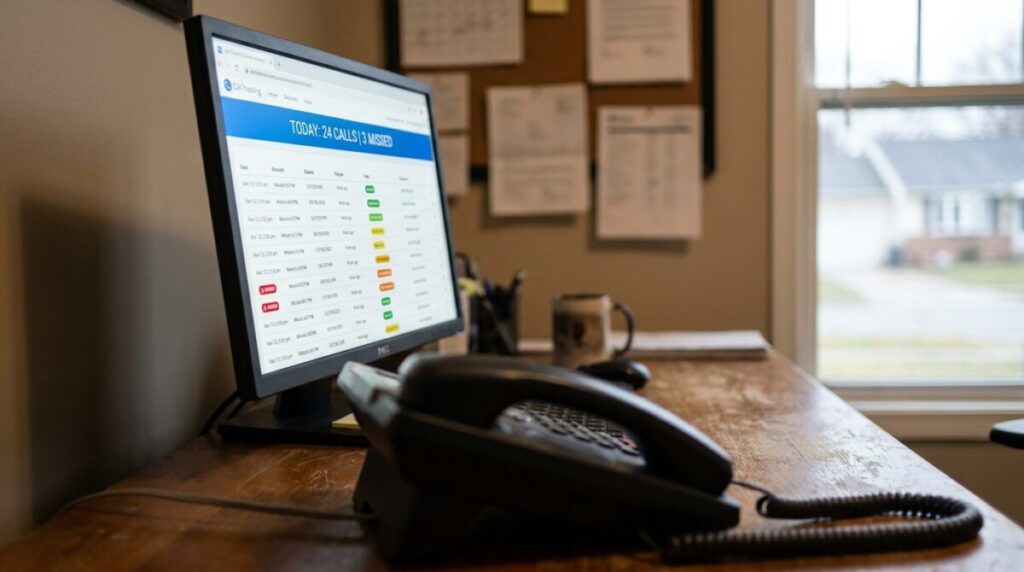
You missed 71 of 200 calls in 30 days, about one in three, and fixing that costs nothing extra in ad spend.
That’s the part owners underestimate. Before you argue about which ad to cut, look at the calls you already paid for and didn’t answer. Calling back within a few minutes wins far more of these.
I’m John Kirker, founder of CallTrackingServices. I run my own business on the same account, the same Weekly call report and the same 8am missed-call list our customers get, and we’ve run our own businesses and our clients’ on it for over ten years. The email I still read first is the missed-call list, not the report.
Do this: open yesterday’s missed calls and call them back today.
Two more snapshots from the last 30 days
The plumber, source by source. Same six tracked sources, same 200 calls. The main line, their Business Profile and website, took 119 calls and missed 30. The number on their organic search listing took 45 calls, 34 of them first-time callers, and missed 24 of those, more than half. Yelp, the source they’d been watching all year, produced 3 calls all month. The fix wasn’t more marketing: a second ring-to phone and missed-call alerts, so the new-customer calls they were already getting got answered. Nothing about the ad budget changed.
Our own agency, on the same account. 220 calls in 30 days from eleven sources. Google Business Profile and organic search brought 143 of them, two thirds, and only about one in six of those went unanswered. The paid search campaign brought 27 calls and 20 were missed, three out of four: paying per click to make the phone ring, then not picking up. A number used on email campaigns logged 12 calls, 11 missed, averaging 80 seconds, which on inspection was mostly junk, so it stopped counting as a lead source at all. Facebook brought 6.
One more, on the revenue side, from my own consulting work: a client found that two advertising deals at $25,000 a month each weren’t delivering. They cut both, moved the money elsewhere, and their business more than doubled while they spent less.
I’ll say what these don’t show. We measured the misses, not the dollars each recovered call turned into. The plumber’s second phone line is new, so I don’t have an after-rate for it yet. When I do, it’ll be on this page.
What you’re probably using now
Google’s own call reporting on ads and your Business Profile is free and worth switching on. It covers Google only. It doesn’t record, doesn’t route, doesn’t alert you to a missed call, and the numbers can reset or change on you. It won’t show calls from Yelp, referrals, your truck or a mailer. Most owners land here after trying it and still not knowing where the other half of their calls came from.
Your agency’s report comes from the people spending your money. It sees clicks, impressions and calls from the ad extension. It doesn’t see the phone, and it doesn’t see the free sources: the Business Profile, organic, referrals, the truck.
Do this: switch on Google’s free call reporting, then count the sources it still can’t see.
How to choose between providers
Us versus the big call-tracking tools
CallRail, WhatConverts, Invoca and Ringba are good products. The honest difference is service, not feature count: we set it up for you and a person answers when you write, where the big tools are self-serve and ticket-based. The person who sets up your account is the person who answers when you write.
Pick them instead if you want hundreds of integrations, a big agency-style dashboard, or an enterprise contract. We’re not that, and we say so. If you’re weighing one specifically, read the CallRail comparison. If you want the plain definition of the category first, start with what service call tracking software actually does.
- Month-to-month, no setup fee, cancel anytime — usage is prepaid and refundable, so there are no surprise bills.
- First-month offer for new customers: no plan fee your first month plus discounted usage, one per business.
- A person sets it up and reads the numbers with you — Concierge setup, not just software.
- Every ad, listing and campaign gets its own tracking number, calls are recorded, and each one arrives labeled with where it came from.
- Missed calls are flagged and sent in the 8am missed-call list, with first-time callers marked so you know who to call back.
Do this: ask any provider you’re considering who sets it up and who answers when you write.
Getting set up
Concierge setup means we do it. We pick the numbers with you, set What callers hear, point forwarding at the phone you already answer, and turn on the 8am missed-call list.
You don’t change your main business number. You don’t change how you answer. There’s a first-month offer, so the comparison is “find out” versus “keep guessing.”
FAQ
How many call tracking numbers do I need?
One per thing you pay for or point people at. A typical small service business runs three to six: Google Ads, Local Services Ads, the Business Profile, Yelp, the truck, the mailer. List every place your number appears today and count it.
How much does service call tracking cost?
A low plan fee plus exactly what you use, drawn from a prepaid Usage balance. No setup fee, month-to-month, cancel anytime. Current rates and Estimate my cost are on the plans page, because we keep the numbers in one place.
Will tracking numbers hurt my SEO or my Google listing?
Your real business number stays your business number. Tracking numbers are assigned per source, and the website number swaps by how the visitor arrived. We’ll walk through your listing with you during Concierge setup rather than guess at your setup here.
Will it tell me how many calls I’m missing?
Yes. Missed calls are flagged by source and by time of day, and the 8am missed-call list lands in your inbox. You also get a Weekly call report and a Monthly call report.
Do I have to change my phone system?
No. Calls forward to the phone you already answer. Many customers keep RingCentral, Grasshopper or whatever they use and put tracking in front of it.
How is this different from sales call tracking software?
Sales call tracking is built around outbound calls logged into a CRM for reps. Service call tracking is built around inbound calls to a business that answers its own phone. Different question, different tool.
Before you talk to any provider, including us
Three things, in order. Do them before you get on a call with anyone, and that includes us.
- 1. Count your sources. Write down every place your phone number appears today: Google Ads, Local Services Ads, your Business Profile, Yelp, the website, the truck, the yard sign, the mailer. That list is your number count, and the number count drives the cost.
- 2. Write down the one question you want answered this month. Which ad made the phone ring, or how many calls you missed. One question, in your own words. If a provider can’t say how they’d answer it, you have your answer about them.
- 3. Ask who sets it up and who answers when you write. Then ask how they charge: by feature tier, per seat, or by what you actually used. Ours is a plan fee plus prepaid usage, month-to-month, and the rates live on the plans page.
Walk into every conversation with those three and you’ll know in ten minutes who fits. Then book Concierge setup and we’ll assign those numbers with you on the call.
Reviewed by John Kirker, Founder, Serial Entrepreneur, Founder, Consultant - last updated October 29, 2026.
Sources for this article
- Three moments: the bill ($1,800 ad invoice), the missed call, 'I found you online'
- One tracking number per source; calls forward to the real phone; source recorded
- Website number swaps by how the visitor arrived (dynamic number insertion)
- Sample: 200 inbound calls in 30 days across six tracked sources, 71 missed, about one in three
- Six-source plumbing setup: Google Ads, LSA, Business Profile, Yelp, truck wraps/yard signs, mailer
- 8am missed-call list, Weekly call report, Monthly call report, Call labels, First-time callers, Usage balance, Concierge setup, What callers hear, Estimate my cost
- Dental sample: new-patient calls from Google Ads 22, booked 9, 41% booking rate
- Non-booking recording signals: insurance = pricing, three-week wait = capacity, 'let me check' = training
Facts drawn from this site's own documented knowledge and first-hand experience.